Sales: 0203 002 0710
Accounts: 0208 432 3002
Admin: 0208 432 6953


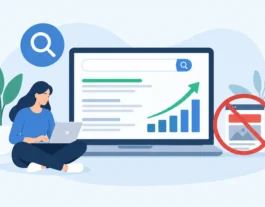
A local plumber does not need to outspend national firms to win work in their area. They need to appear when someone nearby searches for an emergency repair, boiler service or bathroom installation – and give that person a clear reason to get in touch. That is why the answer to can SEO work without ads is yes, but only when it is treated as a long-term lead-generation activity rather than a quick fix.
Paid advertising can put a business in front of prospective customers immediately. SEO earns visibility over time by making a website more useful, more technically sound and more relevant than competing pages. For many small and mid-sized businesses, that can become one of the most dependable sources of enquiries they own.
Yes. SEO and paid ads are separate channels. Google does not require a business to run Google Ads before it can rank in its organic results, and paying for adverts does not directly improve organic rankings.
A business can attract leads through organic search alone if its website answers genuine search demand, performs properly on mobile devices, is easy for search engines to understand and builds trust with visitors. A well-optimised page for a service in a specific location can continue bringing enquiries long after the initial work has been completed.
That does not mean advertising has no value. Ads are useful when a business needs immediate visibility, is launching a time-sensitive offer, operates in a fiercely competitive market or wants to test which services generate the most valuable leads. The strongest approach is often to use SEO and paid advertising for different jobs, rather than viewing one as a replacement for the other.
SEO without ads works best when the website itself is built as a commercial asset. A visually attractive site that is slow, vague or difficult to use will struggle to convert visitors even if it ranks well.
The foundations begin with technical performance. Pages should load quickly, work properly on phones and tablets, use clear page titles and headings, and allow search engines to crawl important content. Broken links, duplicated pages, thin service descriptions and confusing navigation all make it harder to compete.
Relevance is the next priority. A builder in Essex should not rely on a single generic page saying they offer building work. Prospective customers search for particular services, locations and problems. Clear pages covering extensions, loft conversions, renovations or commercial work give search engines stronger signals and give customers a quicker route to the information they need.
Trust matters just as much. Visitors want evidence that a company is established, capable and easy to deal with. Genuine reviews, case studies, clear contact details, examples of completed work, accreditations where relevant and straightforward information about the process can all improve the chance of an enquiry. These details also support the credibility signals search engines look for when assessing local businesses.
For businesses serving London, Essex, the home counties or a defined local area, local SEO can be particularly effective without an advertising budget. The aim is not to rank everywhere for every possible phrase. It is to be visible to the right people in the places the business can serve profitably.
A properly managed Google Business Profile is central to this work. Accurate opening hours, service categories, contact details, photographs and regular customer reviews help a business appear in local map results. The information on the website should match these details and make service areas clear without creating repetitive, low-value location pages.
A useful local page provides more than swapping one town name for another. It explains the service, shows relevant experience, answers local customers’ likely questions and gives them a simple way to call, request a quote or arrange a visit. That is more likely to produce worthwhile leads than chasing broad traffic from people outside the service area.
Content is often misunderstood as publishing frequent blog posts for the sake of it. For a busy business owner, that is rarely a sensible use of time. The priority is content that helps a potential customer move towards a decision.
Start with the questions customers ask before contacting you. A commercial cleaning firm may need to explain contract options, coverage areas and what is included. An accountant may need pages on self-assessment, limited company accounts and bookkeeping support. An e-commerce business may need useful product guides, category descriptions and answers to delivery or returns questions.
The best content is specific, accurate and written from real experience. It should explain what the customer can expect, who the service is suitable for and what happens next. This supports rankings, but more importantly, it filters out poor-fit enquiries and gives serious prospects greater confidence.
Organic SEO is not free simply because there is no cost per click. It requires investment in a capable website, research, content, technical maintenance and ongoing improvement. Results also take time, particularly for a new website or a competitive service.
A local business may see early progress within a few months where there is clear demand and limited competition. More competitive terms can take considerably longer. Rankings may also fluctuate as competitors improve their websites or search engines update how results are assessed.
This is the trade-off against paid advertising. Ads can generate traffic quickly, but the visibility usually stops when the budget stops. SEO is slower to establish, yet the work can build cumulative value. A strong service page, a useful case study or an improved local profile can continue earning attention without paying for each visit.
Businesses should be wary of any provider promising first-page rankings by a fixed date. Search performance depends on the starting position of the website, the quality of competitors, the market, the available content and the work carried out over time. A dependable SEO plan focuses on progress that can be measured, not unsupported guarantees.
Ranking reports alone do not tell the full story. Being number one for a phrase that nobody searches, or that attracts the wrong audience, does not help the business grow.
The measures that matter are relevant organic visits, phone calls, quote requests, form submissions, booked appointments and online sales. Where possible, these should be connected to lead quality and revenue. A page receiving fewer visits may still be more valuable than a high-traffic page if it consistently generates the right type of enquiry.
Tracking also reveals where improvements are needed. If a page is appearing in search but receives few clicks, its title and description may not be compelling. If it receives visitors but no enquiries, the page may need clearer calls to action, stronger proof of experience or a simpler contact process. SEO should be reviewed as an ongoing sales and marketing activity, not left untouched after launch.
There are times when paid ads are the practical choice. A new business may need leads while its organic presence develops. Seasonal services may benefit from short campaigns at peak demand. A company entering a new location can use paid search to test demand before committing heavily to location-specific SEO.
Paid campaigns can also reveal valuable commercial insight. Search terms, conversion rates and enquiry quality can show which services are worth prioritising on the website. In turn, this can make the SEO strategy more focused.
The key is to avoid spending money on ads because the website has not been given a fair chance to perform. If visitors land on an unclear, slow or unconvincing page, paid traffic will only make that problem more expensive.
A sensible long-term plan may use ads for immediate opportunities while SEO steadily reduces reliance on paying for every lead. At Npwebservices, the focus is on building and improving websites that support both routes, with clear reporting on the results that matter to the business.
SEO without ads is entirely possible, but it rewards businesses that stay focused on the customer. Build pages people genuinely need, make it easy for them to trust and contact you, and keep improving what the data shows. That is how organic search becomes a reliable source of future enquiries rather than a gamble on rankings.
