Sales: 0203 002 0710
Accounts: 0208 432 3002
Admin: 0208 432 6953


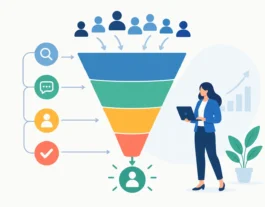
A website can look professional, rank well and still fail to produce enough business if visitors are not given a clear reason and route to get in touch. To build customer enquiry funnel performance that lasts, every stage must make the next step easier: finding your business, understanding the offer, trusting you and making an enquiry without unnecessary friction.
For UK owner-managed businesses, the aim is not simply to collect more form submissions. It is to create a dependable flow of relevant enquiries that your team can respond to, quote for and convert. That calls for more than a contact page. It requires a joined-up approach across your website, SEO, paid advertising, messaging and follow-up.
Before choosing landing page layouts or advertising budgets, define what a worthwhile enquiry looks like. A local electrician may want calls from homeowners within a certain travel radius. A B2B software provider may need conversations with directors at firms of a particular size. An e-commerce business may want abandoned basket recoveries as well as higher-value trade account applications.
This distinction matters because volume alone can be misleading. A campaign that generates 50 poorly matched enquiries can cost more in wasted time than one that brings in 10 well-qualified opportunities. Decide which services, locations, customer types and job values matter most, then shape the funnel around them.
It also helps to agree the most useful action for each audience. A straightforward emergency service may need a prominent telephone number and click-to-call button. A more considered purchase, such as bespoke web development, may benefit from a consultation request, a project brief form or a booked call. Asking for too much information too soon can reduce response rates, but asking for too little can leave your team unable to prioritise leads. The right balance depends on the value and complexity of the work.
Most effective funnels have four practical stages: attract, reassure, convert and follow up. Visitors do not move through these stages in a neat line every time, but treating each one as a job to be done makes weak points easier to spot.
Search engine optimisation is particularly valuable when potential customers are actively looking for the service you provide. Service pages should clearly explain what you do, who it is for and the areas you cover. A page trying to speak to everybody usually gives a less convincing answer than one focused on a specific service and need.
Paid search can add immediate visibility for valuable terms while longer-term SEO work develops. Social advertising can be useful too, particularly where a business needs to create awareness or demonstrate visual work. However, it is usually less effective when used as a broad, untargeted attempt to generate leads from people with no immediate need.
The traffic source should match the page people arrive on. Someone searching for emergency drainage support needs quick reassurance, service availability and a direct route to call. Someone researching a new company website may need examples of commercial outcomes, a clear process and evidence that they will receive ongoing support. Sending both audiences to the homepage creates extra work for the visitor and weakens the conversion opportunity.
Once someone reaches your site, they are assessing risk. They want to know whether you understand their requirement, whether you are credible and whether contacting you will be worthwhile. Clear copy, relevant case studies, reviews, project examples, sector experience and transparent expectations all help answer those questions.
Trust is especially important for businesses that sell higher-value or longer-term services. Explain the process in plain English. Set realistic timescales. Show the people or experience behind the service where appropriate. A potential customer does not need a long technical explanation, but they do need confidence that the work will be handled properly.
The page itself needs to support that confidence. Slow-loading pages, outdated information, poor mobile layouts and confusing navigation make a business appear less dependable, regardless of the quality of its service. Most local and service-based searches now happen on mobile devices, so forms, telephone links and key messages must work well on smaller screens.
A good call to action should be specific and low-friction. “Request a quote”, “Arrange a consultation” or “Get a call back” tells the visitor what will happen next more clearly than “Submit”. Place the action near the relevant content, not only in the website header or at the bottom of a long page.
Keep enquiry forms purposeful. For many service businesses, a name, contact details, service required and short description are enough for the first interaction. You may also need a location, preferred contact time or approximate budget. Every additional field should earn its place by helping your team qualify or respond to the enquiry.
Telephone enquiries matter too. Make your number visible, particularly on mobile, and ensure calls are answered or returned promptly. If a business invests in Google Ads but misses calls during busy periods, the marketing budget is not the real issue. Capacity and response handling are part of the funnel.
The period immediately after an enquiry is where many businesses lose otherwise valuable opportunities. An automatic acknowledgement reassures the prospect that their message has arrived, but it should never become a substitute for a human response. Set clear internal expectations for who receives leads, who follows up and how quickly.
For straightforward requests, a fast call can often clarify the requirement better than a string of emails. For larger projects, a considered response that refers directly to the customer’s situation will stand out more than a generic sales message. Record the outcome in a simple customer relationship management system or lead tracker so that no enquiry is forgotten.
A general contact page has a role, but it should not carry the full burden of lead generation. Dedicated service and campaign landing pages give you more control over the message, proof and call to action. They also make it easier to identify which services and marketing channels are producing worthwhile enquiries.
For example, a Google Ads campaign for web design in Essex might direct visitors to a page that addresses website performance, search visibility, ongoing support and the consultation process. It should not make the visitor search through unrelated hosting or video production information to understand the offer. The same principle applies to local SEO pages, email campaigns and social adverts.
Avoid building separate pages purely to repeat location names. Pages should provide genuine value for the visitor, with relevant services, local knowledge where useful and clear commercial information. Search visibility is stronger when the content is written to answer real questions rather than to force keywords into every paragraph.
Tracking is what turns an enquiry funnel from a hopeful marketing exercise into a managed sales process. At a minimum, record where leads came from, which page or advert prompted the enquiry, how quickly you responded and whether the lead became a sale.
Website analytics, form tracking, call tracking and CRM records can reveal different parts of the picture. A source that appears expensive at first may deliver your highest-value customers. Another may generate plenty of enquiries but few accepted quotes. Without sales feedback, marketing decisions are based on incomplete information.
Review the funnel regularly. Look for pages with strong traffic but weak conversion, forms that are abandoned, campaigns that attract the wrong location or service type, and delays in follow-up. Test one meaningful change at a time, such as a clearer offer, shorter form or stronger proof point, so you can understand what improved the result.
A customer enquiry funnel is not finished when a new website goes live or an advertising campaign starts. Search behaviour changes, competitors improve their marketing, seasonal demand moves and customers ask new questions. The businesses that continue to generate enquiries are usually those that keep refining their pages, tracking performance and responding to what the data shows.
At Npwebservices, the focus is on building commercially effective websites and marketing activity that can be measured, improved and supported over time. The most useful next step is simple: review the route a real prospect takes from search to enquiry, then remove one obstacle that may be stopping them from getting in touch.
